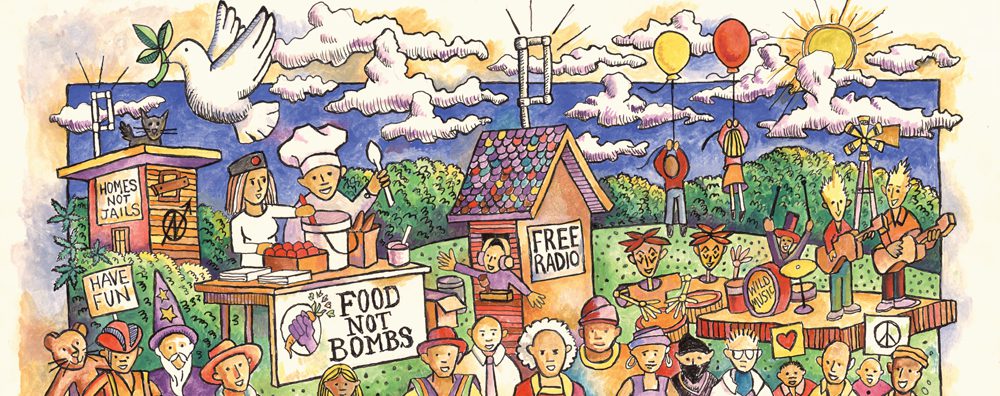
Food Not Bombs is a global grassroots movement that works to address issues of hunger, poverty, and social inequity. The organization primarily focuses on providing free food to those in need, often using food that would otherwise go to waste. Food Not Bombs is known for its commitment to non-violent direct action and the principles of mutual aid.
Why is there always money for the military and police departments across the nation while many social services face cutbacks?
Founded in 1980 in Cambridge, Massachusetts, USA, by anti-nuclear activists, Food Not Bombs (FNB) emerged amidst heightened nuclear tensions and anti-nuclear protests, reflecting a broader commitment to peace and social justice.
The name “Food Not Bombs” reflects the organization’s emphasis on redirecting resources from military spending and other destructive activities towards meeting basic human needs, particularly the need for food (i.e. there is always government money to fund the military, but not enough to make sure that all citizens to have enough to eat). Volunteers in various communities come together to collect surplus or discarded but safe to eat food from local grocery stores, bakeries, and farms. They then prepare and distribute vegetarian or vegan meals to the community, usually in public spaces.
In addition to addressing immediate hunger, Food Not Bombs aims to raise awareness about social and economic inequality and environmental issues. Throughout its evolution, FNB has supported a range of social movements, from its involvement in anti-globalization protests and various disaster relief efforts, to the Occupy and Black Lives Matter uprisings.
Continue reading
 HARTFORD FOOD NOT BOMBS